



JG

Building on the recent assembly, How to Improve Performance: Making the Most of Google Calendar, this blog explores how small, intentional changes can make a big difference. With the March mock examinations approaching, now is the perfect time to take control of routines, organisation, and study habits. Even simple adjustments made today can lead to noticeable improvements in confidence, resilience, wellbeing, and—most importantly—exam performance. Success is often not about doing everything differently, but about doing a few key things more consistently and effectively.
“Success is not about one massive leap forward – it’s about hundreds of tiny steps in the right direction.” – Sir Dave Brailsford, Performance Director, British Cycling
The idea of achieving massive success by making minute, almost unnoticeable changes might sound like a contradiction. Yet, this is the core of the 1% Theory, a powerful concept that transformed a struggling national sports team into Olympic champions. It proves that the path to big success is paved with small, consistent steps.
From Bikes to Breakthroughs
When Sir Dave Brailsford took over British Cycling in the early 2000s, the team wasn’t exactly known for Olympic glory. But his approach-known as the 1% Theory or Principle of Marginal Gains – changed everything.
Brailsford believed that if you improve everything you do by just 1%, the cumulative effect can lead to extraordinary results. His philosophy didn’t stop at just intense training. He focused on every minute detail:
- Adjusting bike seats for perfect aerodynamics.
- Experimenting with lighter, more breathable fabrics.
- Teaching strict handwashing routines to prevent illness.
- Providing cyclists with personal mattresses and pillows for optimal sleep.
It might sound excessive – but it worked.
Results:
British Cycling went on to dominate the 2008 and 2012 Olympic Games, while Brailsford’s professional team, Team Sky, won multiple Tour de France titles. The message was clear: micro-improvements lead to macro-results.
The Big Idea: The Aggregation of Marginal Gains
Brailsford called his method “the aggregation of marginal gains.” In other words, success doesn’t come from one huge breakthrough – it comes from many small, consistent improvements that add up over time.
In education, this idea fits perfectly. Whether you’re revising for GCSEs or refining A-level essays, it’s about taking manageable steps – improving slightly, but consistently. Over time, those 1% improvements accumulate into big results.
Applying the 1% Theory at School
The genius of the 1% Theory is that it removes the pressure of perfection. You don’t need to be the best today – you just need to be slightly better than yesterday.

For GCSE Students: Building the Basics
For younger students, the 1% Theory is about forming good habits early. You don’t need to overhaul your study routine – just make one small improvement every day.
Take Mia, a Year 10 student. She started spending five minutes each evening tidying her notes and colour-coding key terms. It didn’t feel like much, but over a month she became more organised, confident, and less stressed before tests.
| Try these 1% improvements: | Impact: |
| Spend five minutes rewriting or improving one set of notes. | Notes are clearer and retention improves. |
| Learn three new words daily in Science, English, or French. | Vocabulary rapidly expands. |
| Answer one extra past paper question each evening. | Exposure to exam-style questions increases. |
| Go to bed ten minutes earlier to improve focus. | Better sleep improves concentration during the day. |
💬 “It’s like levelling up slowly in a video game — you don’t notice it at first, but by the end you’re miles ahead.” — Year 11 Student
For A-Level Students: Refining Independence
At A-level, it’s about sharpening your skills and deepening your thinking. You already know what to do – the 1% approach helps you do it better.
Arjun, an A-level Psychology student, realised that improving his essays didn’t mean starting from scratch. Instead, he focused on tightening one paragraph per essay – refining arguments, adding stronger evidence, or improving evaluation. His grades rose steadily, and his confidence grew.
| Try these 1% improvements: | Impact: |
| Add one extra flashcard to your revision deck each night. | Revision materials become more comprehensive. |
| Choose one piece of feedback to act on after every essay. | Focused skill development and immediate application. |
| Replace five minutes of scrolling with a short walk or breathing exercise. | Improves mental clarity and reduces stress. |
| Review your weekly plan every Sunday—give one subject a little extra attention. | Strategic allocation of effort where it’s needed most. |
💬 “Improvement doesn’t have to be dramatic – it just has to be deliberate.” – A-level Tutor
Why the 1% Theory Works
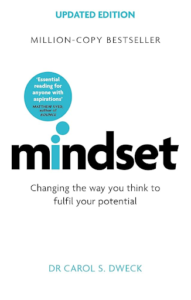
The 1% Theory is essentially the growth mindset in action. Psychologist Dr. Carol Dweck argues that success comes from believing ability can improve with effort. The 1% Theory replaces all-or-nothing thinking with gradual, meaningful progress. It’s not about being perfect; it’s about being better.
💭 “Don’t aim for perfection; aim for progress.”
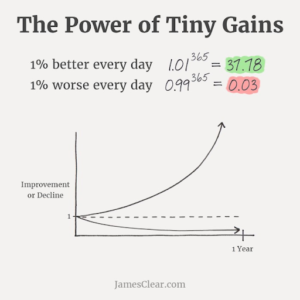
Quick Tips: The 1% Challenge
- Improve one aspect of your work or routine each day.
- Reflect on one success every evening.
- Share one new idea or revision trick with a friend each week.
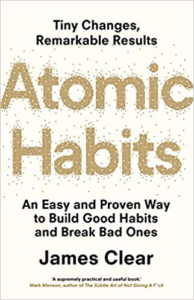
As James Clear, author of Atomic Habits, puts it: “If you commit to getting 1% better every day, you’ll be 37 times better by the end of the year.” That’s the true power of one percent.
Additional Reading:

Co-Principal
James Garside